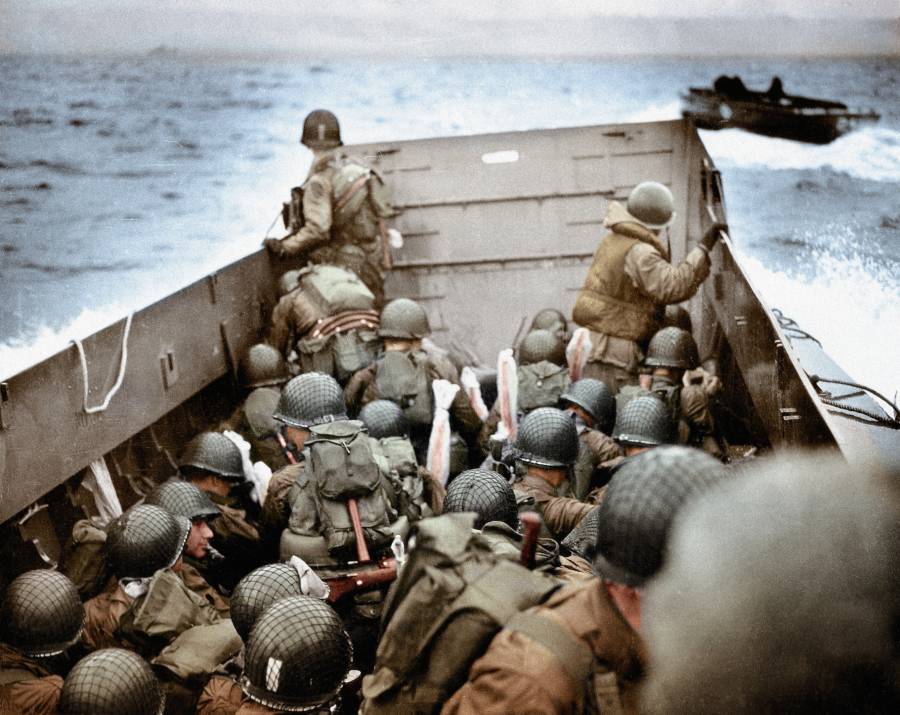
We will talk about one of the greatest wars in history. World War II is an international war that started on September 1, 1939 in Europe and ended on September 2, 1945, in which the vast majority of the world’s countries, including the superpowers, participated in two conflicting military allies: forces Allies and Axis countries, as it is the largest war in history, more than 100 million people from more than 30 countries participated directly in it, and the major countries put all their military, economic, industrial and scientific capabilities in the service of the war effort. The Second World War was marked by a large number of civilian deaths, the strategic bombing that killed about one million people, including the two atomic bombs that were dropped on Hiroshima and Nagasaki.The war resulted in between 50 and 85 million deaths, according to estimates. Therefore, World War II is the bloodiest war in The history of mankind.
Date 1 September 1939 - 2 September 1945 (6 years and 1 day)Causes of the Versailles Treaty, the causes of World War II, and Adolf Hitler modified the value of a property (P828) in a data wiki Location Europe, Pacific, Atlantic Ocean, Southeast Asia, Japan, China, Mediterranean, Middle East, Africa, North America, South America.
The result is the victory of the Allies.
Turn the page of the Third Reich.Create the United Nations.
The emergence of the United States and the Soviet Union as a superpower Beginning of the Cold WarThe Japanese Empire had declared war on the Republic of China on July 7, 1937, as it aimed to take control of Asia and the Pacific, [7] but the actual beginning of the war was on September 1, 1939, [8] when Germany invaded Poland, and rolled back Then declarations of war on Germany by France and the United Kingdom. From late 1939 to early 1941, Nazi Germany took control of a large area of the continent of Europe after a series of military campaigns, and formed the Axis Alliance with Italy and Japan, and agreed with the Soviet Union to share the neighboring lands: Poland, Finland, Romania, and other countries. Baltic. The primary battle in the war remained between the Axis powers on the one hand, and the United Kingdom alongside the Commonwealth countries on the other, in addition to a campaign in North Africa and another campaign in East Africa, in addition to the Berlin air battle, the London bombing, the Balkan campaign, and the battle of the Atlantic. In June 1941, the Axis Alliance invaded the Soviet Union In what is known as Operation Barbarossa, which ignited the Eastern Front, which is the largest theater of war in history, which made the major axis countries in a war of attrition, and Japan in December 1941 attacked the Pearl Harbor, as it attacked the British Malaya region in the Pacific Ocean, and it quickly took over On a large part of the western Pacific Ocean.
When Japan lost in the Midway battle near Hawaii, and Germany lost in the battle of the Second Alamein North Africa, and the Soviet Union was defeated by a crucial victory in Stalingrad, and 1943, In 1944, allies were liberating in France while Normenese was aimed at removing all areas lost and invaded Germany and its allies. In 1944 and 1945, Japan fell in southern Central China and in Burma's campaign, while the Allies with the Japanese Empire Movement and controlled the main islands in the Pacific Ocean.
The war in Europe ended with allies of Germany, and the Soviet Union control over Berlin and unconditional surrendered by Germany on 8 May 1945. The Potsdam Conference was held near Berlin, which was issued by the Potsdam Declaration on June 26 The countries affected by the industry has been repaired by economic status, while in the political level, in particular in Europe, the stage of integration has begun to avoid monopolies that cause wars and have a common identity. On September 1, German forces attacked Poland on the grounds that Poland launched attacks on German land [64] and two days later on September 3, 1939 and as a result of Germany's British warning to halt military operations in Poland, both the UK and France have announced Germany. On September 17, 1939, the Soviet Union attacked Poland [66] [66] and on 27 September 1939 Poland surrendered to the resistance pockets [67] and on 6 October final surrender was announced to Poland after the battle of Cook [6 On 6 October and after the campaign ended on Poland, Hitler had presented a peace treaty on Britain and France, saying that the future of Poland was set by Germany and the Soviet Union and on October 12 came from British Prime Minister Neville Chamberlain After the demarcation of the border between Germany and the Soviet Union, the latter forced Baltic States to host its military bases within its territory within mutual assistance charters, but Finland rejected the delivery of its territory of the Soviet Union, an end to its invasion on November 30 as he knew Near Oslo On December 13, the first maritime battles occurred in World War II, with three British royal naval tribes attacked the German ship Admiral-Gravie, at the mouth of the Labata River near the coast of Argentina in South America and led the attack to the dumping of the German ship On 8 April 1940, Britain began with the Wilfrid process with a view to cutting the raw iron line from Sweden through Norway and Denmark to Germany, and began mine action on Norwegian territorial waters, which caused the same mines by several German vessels [ On April 9, Germany invaded Norway and Denmark with a view to securing the iron line, Denmark surrendered in a few hours [77], while the campaign continued to Norway until June 10th of the same year. British troops have suffered heavy losses and did not leave any victories except for the battle of Narvik, prompting British Prime Minister Neville Chamberlain to resign, and Winston Churchill received on May 10, 1940, 10 May 1940, Germany launched an attack To carry out a collective evacuation in Dunkirk - Dynamo operation - continued from May 27 to June 4, leaving their heavy equipment [83] and on June 10, the Italian invasion of France 84, and on June 14, the French capital Paris fell by pain France after the German invasion and June 22, France signed the Treaty of Surrender in the same place and the same vehicle in which the Germans signed their surrender in World War I [87], followed the division of France into two parties, north under German and south under French referee «This war is not limited to a territory's loss in our country, this war did not end with the loss of France's battle. In the meantime May 10, Britain had invaded Iceland, Greenland and Faroe Islands, which followed Danish crown, anticipating possible German invasion. [91] In June, the Soviet Union invaded the Baltic, Latvia, Estonia and Lithuania [92], and then the regions of Pesarabia and Pokovina and Herzra are all located under Romanian sovereignty. [93] Fiatzislav Molotov, Prime Minister of the Soviet Union, which was restricted to the agreement of non-attack between him and Germany, he congratulated the Germans and tried to share victory by his reading: "The Soviet leadership is sincere congratulations to Its launcher hits BerlinA British Royal Air Force Spitfire, which participated in the war.
After the fall of France, Britain became alone in the battlefields against the German enemy, which caused British Prime Minister Neville Chamberlain to resign during the fighting with the Germans to take his place Winston Churchill, fortunately for the British that many soldiers were able to escape from northern France by using thousands From the small civilian boats to smuggle soldiers to the British shore, there is a widespread belief that the soldiers can escape, the reason and underlying that is, that Hitler was the one who ordered the stopping of the armored units based on the advice of the Air Minister, who advised Hitler to stop the attack to re-prepare After consumption units, which will open a window to Britain to smuggle its soldiers from the battlefields in northern France, also referred to as Britain has benefited greatly by using the same soldiers landing on Normandy.